
Retaining wall construction in Chula Vista CA - a wall that drains and holds

Slope slipping onto your yard or an old wall leaning out? We build retaining walls planned around drainage so the soil stays put.

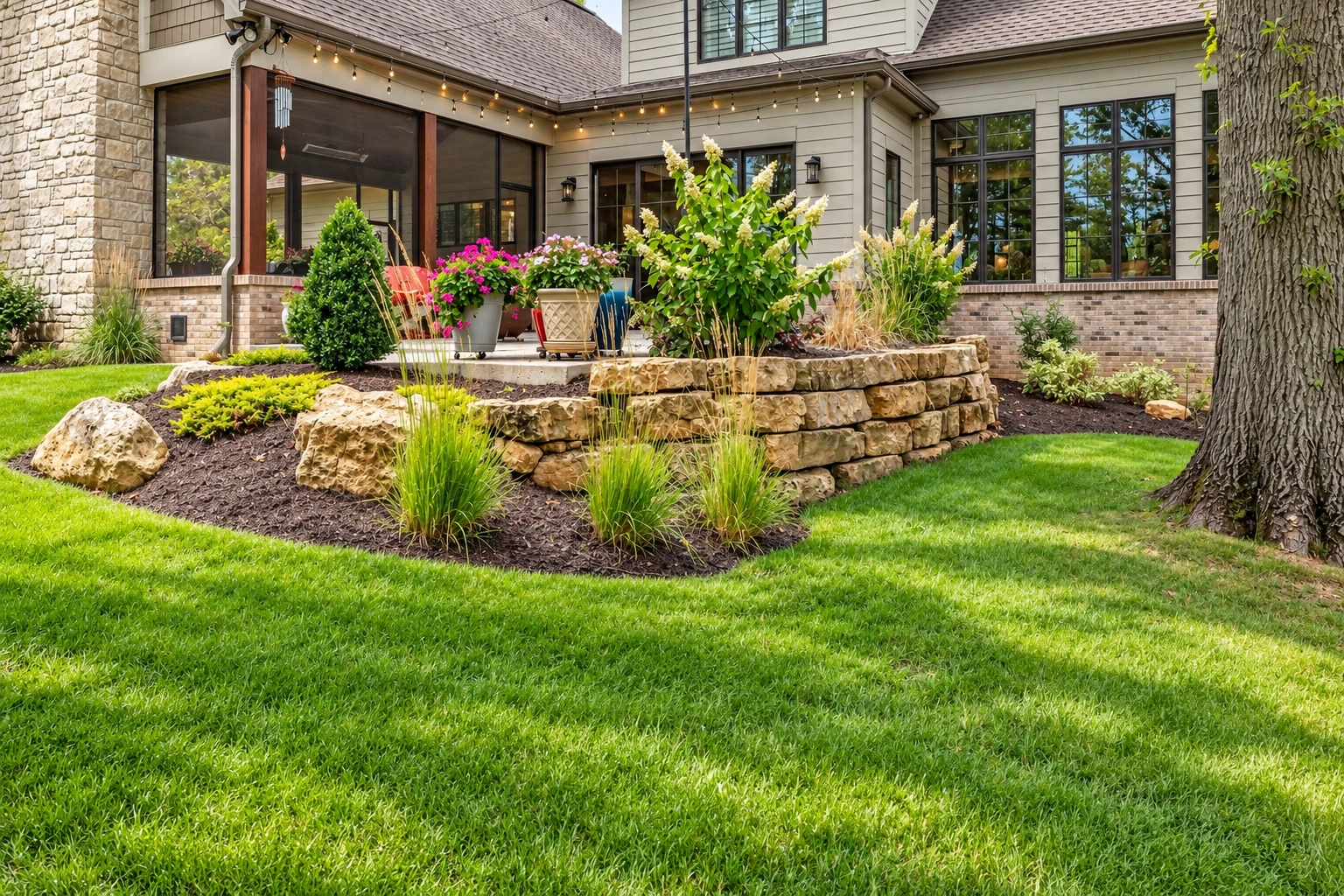
Low retaining wall of rough tan stone blocks borders a raised flower bed in front of a house.

What goes into building a retaining wall in Chula Vista?

Retaining wall construction in Chula Vista means building a wall that holds back the soil pressing on it from behind. It sits on a concrete footing, the base that keeps it from tipping or sliding, and its drainage is planned so water doesn't pile up behind it.

Most calls start with a slope creeping onto a patio, a yard someone wants leveled, or an old timber wall that's leaning. The price mostly comes down to the wall's height and length, what will sit above it, like a driveway, and whether an old wall comes out first. The schedule usually turns on plans and the city's permit review more than on the masonry.

We're licensed and insured, and when your wall needs a permit, we pull it, line up the city's inspections and keep you posted. If you have an older wall that's still solid and just looks tired, masonry restoration may be all it needs. Either way, the on-site estimate is where you get the figure for your yard.

What happens when you call us about a retaining wall?

  1. Call or send a message

    Tell us roughly how tall and long you picture the wall and what will sit above it, like a driveway or a patio. We'll set a time for me to come out and see it.

  2. I look at it with you

    I walk the spot with you, show you where the water runs and what I'd watch for, and answer your questions right there. Then I send a written estimate covering the wall type, the drainage and what the permit will need, so you know what you're paying for.

  3. We sort out the permit

    Before work starts, we check with the city so you know where things stand, then pull the permit and send the plans to Development Services for review. We don't start until you've said yes to the written estimate.

  4. We build and walk it together

    I run the work on site with our crew, and for a typical masonry wall the city inspects the footing, each grout lift, the layer of grout poured into the block, with the drain and gravel in place, and the finished wall. When it's done, we walk it together and I show you where the water goes.

Chula Vista retaining walls start with the drainage

A retaining wall gets into trouble when water has nowhere to go, so drainage is the first thing I plan and the first thing I explain. Wet soil is heavier than dry soil, and water trapped behind a wall keeps pushing on it until something gives.

That's why I'd tell you to ask every builder you talk to how the wall will drain before you settle on a design. On ours, I'll show you where the gravel goes, where the drains run and where that water ends up, so it's no mystery once the wall is backfilled.

What goes into a retaining wall:

  • Digging out and the footing
  • Block or poured concrete wall
  • Gravel and drains behind it
  • Backfill and cleanup

Repair or rebuild your retaining wall

If a wall is leaning, bulging or cracked through, the problem is usually behind it or under it, so patching the face won't hold and I'll tell you a rebuild is the honest answer. If it's standing straight and the trouble is surface wear, a repair makes more sense. For old timber or railroad tie walls, I'd go with block, because the masonry industry's design manual says block units resist cracking and don't splinter or decay the way treated wood does.

What shapes the cost of a retaining wall

Height matters most, because a taller wall needs more digging, a bigger footing and more reinforcement. Length, curves, terraced steps and a decorative finish all add to it, and so does tearing out an old wall first. A driveway or a building above the wall changes what it has to hold back, and whether your wall can follow the city's guide or needs its own soils report and calculations changes the cost of the paperwork too.

A wall you understand before it's built

I started this business in Chula Vista in 2023, after teaching myself masonry on brick and block walls and learning the rest next to experienced masons. I come out to every job myself and I'm on site running the work, so the person who explained your wall is the one watching it go up.

We keep your yard picked up as we go and tell you before anything changes. I'd rather you understand why we built it a certain way than make a quick sale, whether it's a retaining wall or a fireplace installation. Your satisfaction, guaranteed.

Plan your retaining wall before you dig

Call with the wall's planned height, length and anything that will sit above it, and we can talk through which kind of wall fits.

Get a written estimate for your retaining wall

Tell us where the wall goes, how tall and long you picture it and what sits above it. We reply within one business day, and I come out for a free, no-obligation on-site estimate.

(619) 257-1054

Retaining wall questions we hear

Do I need a permit to build a retaining wall in Chula Vista?

Usually yes, because the city only lets a wall skip a building permit when it's 3 feet or less, measured from the top of the footing to the top of the wall, with no surcharge, that is, no building or vehicle weighing on the soil above it. Even a wall that skips the permit still has to meet local and state building codes, and the Planning Division reviews every new structure against the rules of its zone. We check with the city before we start, and you can ask the city which inspections your wall needs.

How much does a retaining wall cost in Chula Vista?

A 3-foot-high poured concrete retaining wall in Chula Vista, installed with site prep, excavation and reinforcement, usually costs about $45 to $49 per square foot. That usual rate likely doesn't cover removing an old wall, terraced walls, decorative concrete, extra height or curves. Your written estimate spells out what your own wall includes.

How does a retaining wall drain water?

A masonry retaining wall needs a planned way for water to get out, because the masonry industry's guidance says these walls need provisions that stop water from collecting behind the face. Segmental block walls are stacked dry, without mortar, so water drains out through the face itself. Where heavy, long rains are expected, the same guidance says a continuous drain along the back can be added to the drains through the wall.

Do I need a soils report for a retaining wall in Chula Vista?

Not if your masonry wall is built from the city's Masonry Retaining Walls Guide, because that guide can serve as the construction plan. Otherwise, a Chula Vista permit application includes a soils report and structural calculations, which adds time and cost before any digging. I'll tell you at the estimate which route fits your wall.

What happens before digging starts on a retaining wall?

Underground utilities get marked through the 8-1-1 service first, and a block wall installation guide says to allow a few days for that marking before work starts. By then we'll have the permit sorted, and we lay out where the wall will sit so you can see it on the ground.

How long does it take to build a retaining wall in Chula Vista?

Most of the calendar usually goes to the steps around the masonry, like plan review, utility marking and the city inspections at each stage. Industry guidance also says soil shouldn't go back against a masonry wall until the masonry has gained enough strength or the wall is braced, and heavy equipment stays back from the top by at least the wall's height during backfill. I'll walk you through the order for your wall when I come out.

Serving Chula Vista and nearby cities

We're based in Chula Vista and build retaining walls in National City, Bonita and the other cities below. Pick yours, or give us a call if you don't see it.

Call (619) 257-1054